
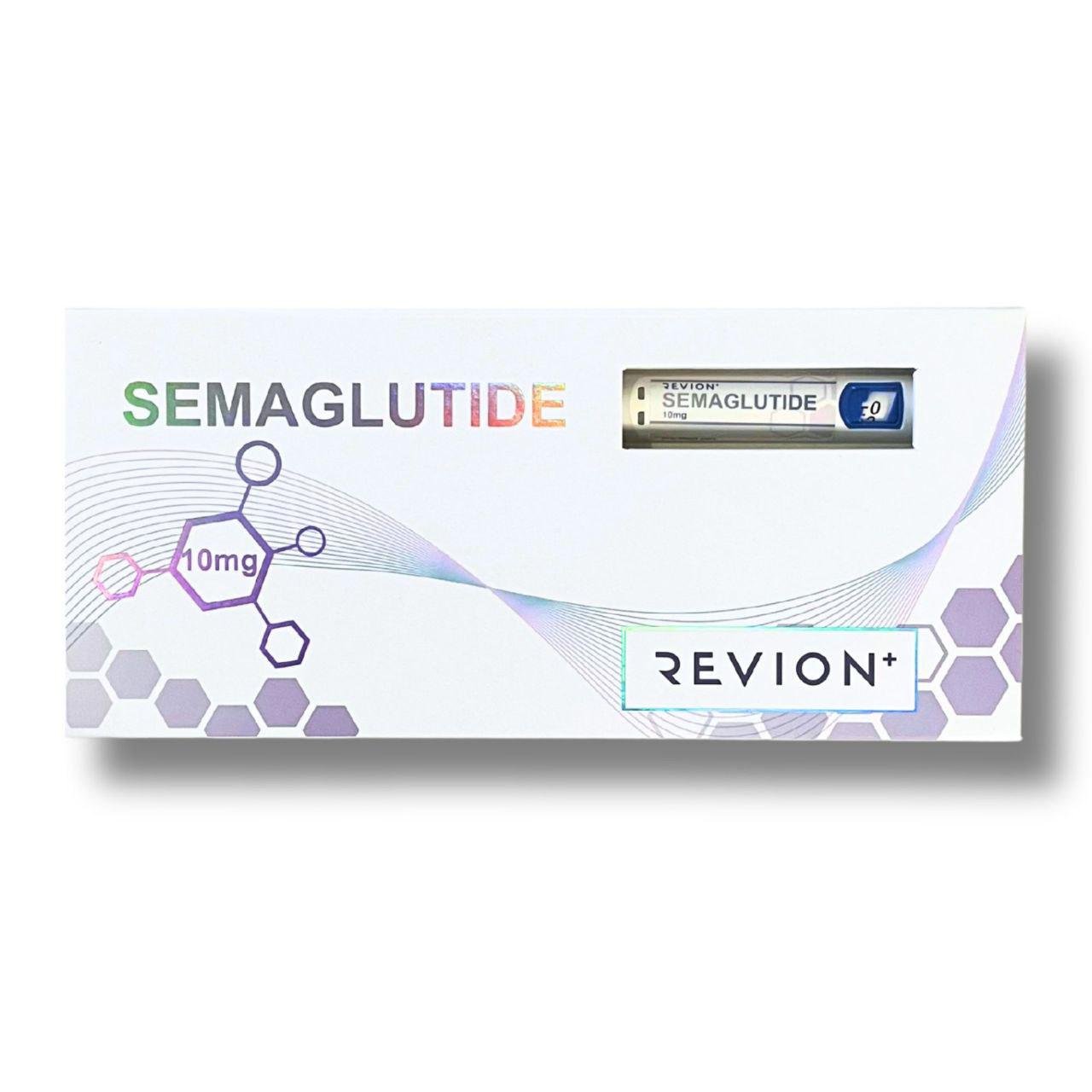
Revion Semaglutide
£120.00 – £150.00Price range: £120.00 through £150.00
SKU: N/A
Category: Semaglutide
Revion Semaglutide Research Peptide
Revion Semaglutide is a long-acting Glucagon-Like Peptide-1 (GLP-1) receptor agonist engineered specifically for advanced scientific research into metabolic regulation, glycemic control, and appetite signaling mechanisms. Designed with structural modifications that resist enzymatic degradation by dipeptidyl peptidase-4 (DPP-4), Semaglutide provides researchers with an extended half-life reference standard for in vitro and in vivo experimental protocols.
Synthesized to strict laboratory standards by Revion Research Lab, every batch of Revion Semaglutide undergoes rigorous independent HPLC and Mass Spectrometry testing to guarantee sequence integrity, chemical purity, and reproducible batch consistency.
Technical Specifications & Product Overview
Specification Parameter |
Technical Detail |
Product Name |
Revion Semaglutide |
Compound Class |
GLP-1 Receptor Agonist |
Purity Grade |
≥98% (Verified via HPLC/MS) |
Form |
Lyophilized powder / cake |
Storage Temperature |
Store at -20°C (Long-term); 2°C–8°C post-reconstitution |
Primary Research Field |
Glycemic Regulation, Metabolic Pathways, Satiety Signaling |
Catalog Category |
Metabolic Research Peptides |
Key Research Pathways & Biological Mechanisms
When utilizing Revion Semaglutide in experimental research models, study protocols focus primarily on three core biological pathways:
1. GLP-1 Receptor Activation & Insulin Secretion
Semaglutide selectively binds to and activates the GLP-1 receptor, stimulating glucose-dependent insulin secretion from pancreatic beta cells. This pathway allows researchers to observe acute and sustained glycemic regulation in metabolic models.
2. Gastric Emptying & Satiety Pathways
-
Central Appetite Regulation: Interacts with hypothalamic signaling centers in animal models to modulate satiety and caloric intake behavior.
-
Delayed Gastric Motility: Slows early postprandial gastric emptying, making it a critical tool for investigating nutrient absorption kinetics.
3. Glucagon Suppression & Hepatic Glucose Output
By downregulating inappropriate glucagon secretion from pancreatic alpha cells under elevated glycemic conditions, Revion Semaglutide assists in evaluating reduced hepatic glucose production mechanisms.
Why Choose Revion Semaglutide for Your Laboratory?
-
Sequence Fidelity & High Purity: Analytical validation ensures ≥98% purity, eliminating unexpected variables caused by residual synthesis byproducts.
-
Batch-Specific Documentation: Every order is supplied with a comprehensive Certificate of Analysis (CoA) for transparent record-keeping.
-
UK Cold-Chain Dispatch: Domestic fulfillment from our UK facility guarantees fast shipping and preserves biological stability throughout transit.
Handling & Reconstitution Guidelines
-
Storage Upon Receipt: Store unopened lyophilized vials in a temperature-controlled freezer maintained at -20°C, away from direct light.
-
Reconstitution Procedure: Allow the vial to reach room temperature before adding sterile bacteriostatic water or designated laboratory buffer.
-
Usage: Swirl gently until completely dissolved (do not shake or vortex). Immediately freeze unused reconstituted aliquots to prevent premature enzymatic breakdown.
Related Research Categories & Cross-Reference
Expand your metabolic research scope by exploring complementary peptide models in the Revion inventory:
-
Dual & Triple Agonists: Compare single-receptor GLP-1 activity against dual-action Revion Tirzepatide or multi-receptor Revion Retatrutide Peptides.
-
Pre-Measured Formulations: Inspect multi-dose pre-loaded options on our Revion Retatrutide Pen 40mg Page.
-
Cellular Energy & Anti-Aging: Evaluate coenzyme pathways alongside mitochondrial studies on the Revion NAD+ 1000mg Page.
-
Tissue Repair Complexes: Explore synergistic cell recovery on the Revion Glow Blend 70mg Page.
| Mg | 5mg, 10mg |
|---|
Reviews
There are no reviews yet.